

Reviewed 2026-09-17 against current CapCut Help and Resource pages. I did not run speech recognition, translation, subtitle import or export for this guide. Controls can vary by platform, version, region and account.
CapCut has several caption tools, but the fastest route depends on what you are trying to do. Generating speech-to-text, repairing timing, translating a track and moving an SRT file are separate jobs. This hub points you to the right workflow without making you repeat a long beginner tutorial.
Choose by task: Generate → Edit → Style → Translate → Import or export → Fix a problem.
Caption or subtitle: which term should you use?
In everyday CapCut use, the labels overlap. CapCut calls its speech-to-text feature both Auto Captions and Recognise Subtitles in current help material. A useful working distinction is simpler: accessibility captions represent speech and meaningful non-speech audio, while subtitles usually carry dialogue in the same or another language. Regional terminology differs; generated speech text alone may still need speaker labels or meaningful sound cues. The editing decision matters more than the label.
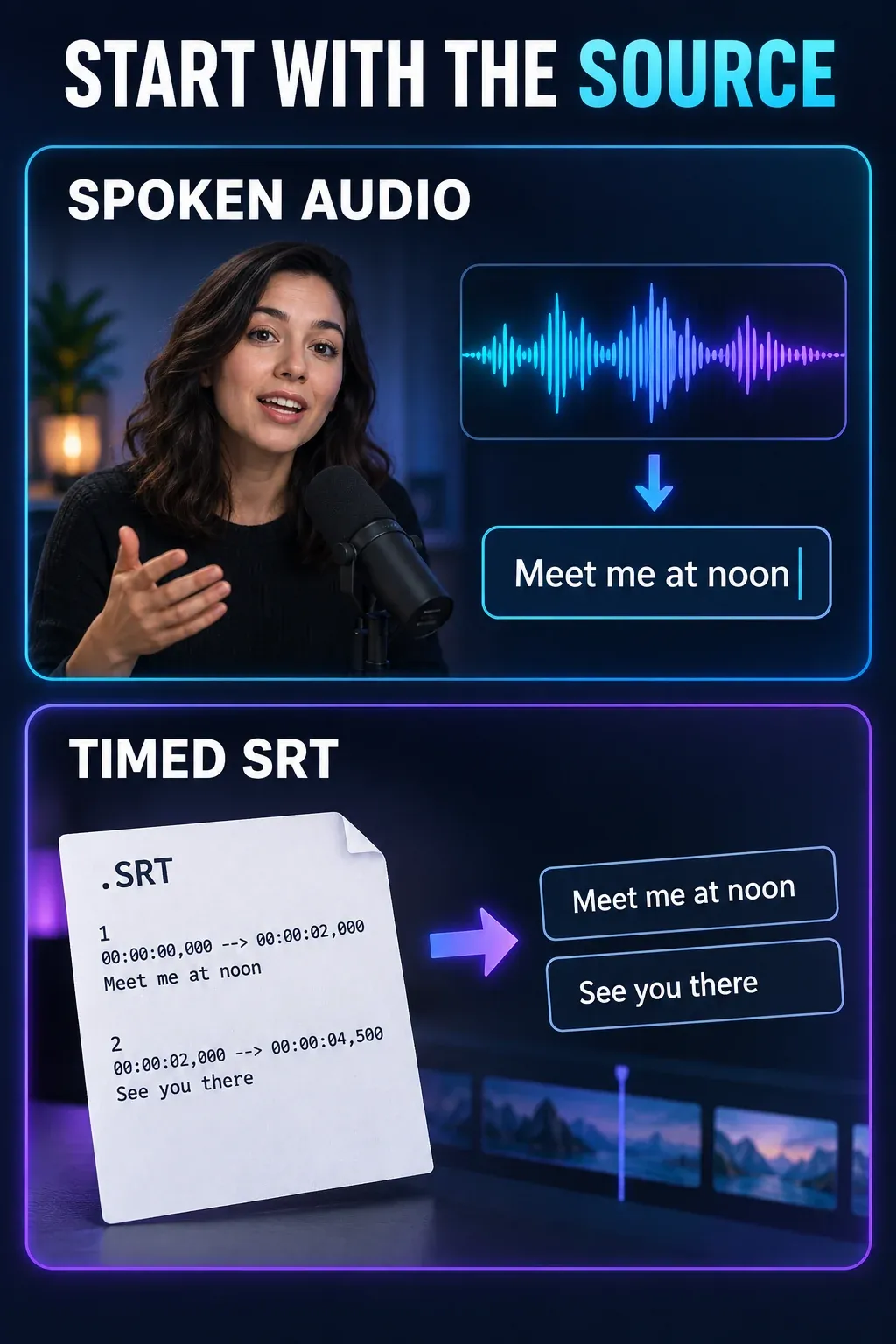
If speech is already in the video, begin with generation. If a translator or client supplied timed text, begin with import. If the text exists but looks wrong, go directly to editing, styling or troubleshooting.
What works on Web, Desktop and Mobile?
| Task | Web | Desktop | Mobile | Best next guide |
|---|---|---|---|---|
| Generate speech captions | Yes | Yes | Yes | Auto captions |
| Correct caption text | Yes | Yes | Yes | Editing route |
| Word-by-word styling | Varies | Varies | Varies | Word-by-word captions |
| Bilingual generation | Documented | Documented | Documented | Bilingual subtitles |
| Direct subtitle-file import | SRT | SRT or timed TXT | No direct file import | Import subtitles |
| Subtitle-file export | Available in supported workflows | Available in supported workflows | Do not assume parity | Export SRT or TXT |
The matrix is a routing aid, not a permanent feature promise. CapCut says the core recognition function is available on all three platforms while advanced options can depend on region and app version. Check the exact menu on the device that will finish the project.
1. Generate captions from speech
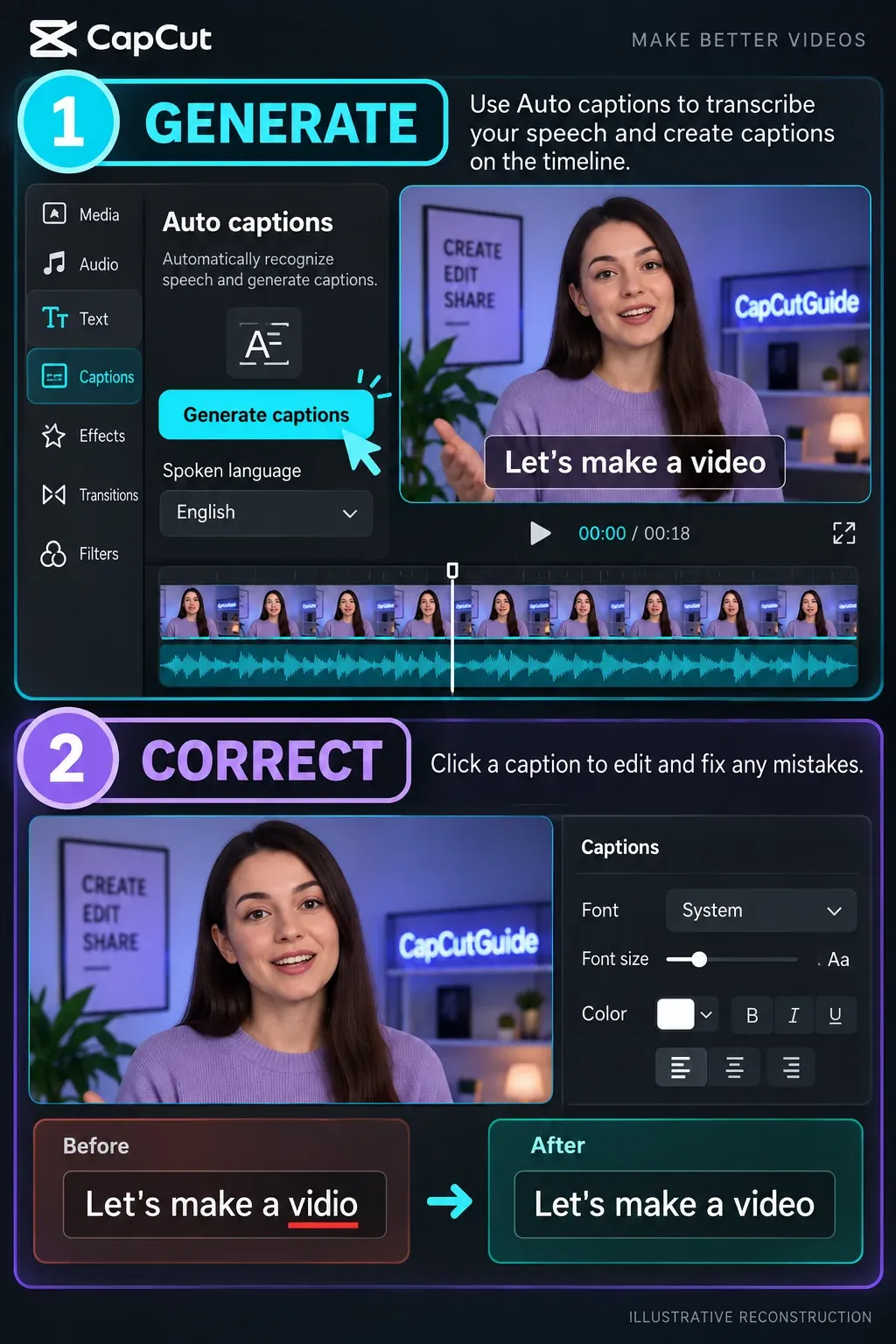
Use the complete CapCut Auto Captions guide when you have spoken audio and need editable text. It covers Mobile, Desktop and Web, then moves through correction, timing and readable styling.
Before generating, choose the spoken language and listen to the source once. Music over dialogue, overlapping speakers and a wrong language choice can create errors that are slower to repair than a clean second generation. CapCut's recognition guidance confirms all three platforms, but menu names and advanced controls can differ.
Use this route when: the timeline has clear spoken audio and no trusted transcript or subtitle file already exists.
2. Edit the words, line breaks and timing
Generated text is a draft. Correct names, numbers and product terms first. Then shorten dense blocks, keep line breaks natural and check whether each caption starts and ends with the spoken phrase. CapCut documents text editing across Web, Desktop and Mobile, though the controls are arranged differently.
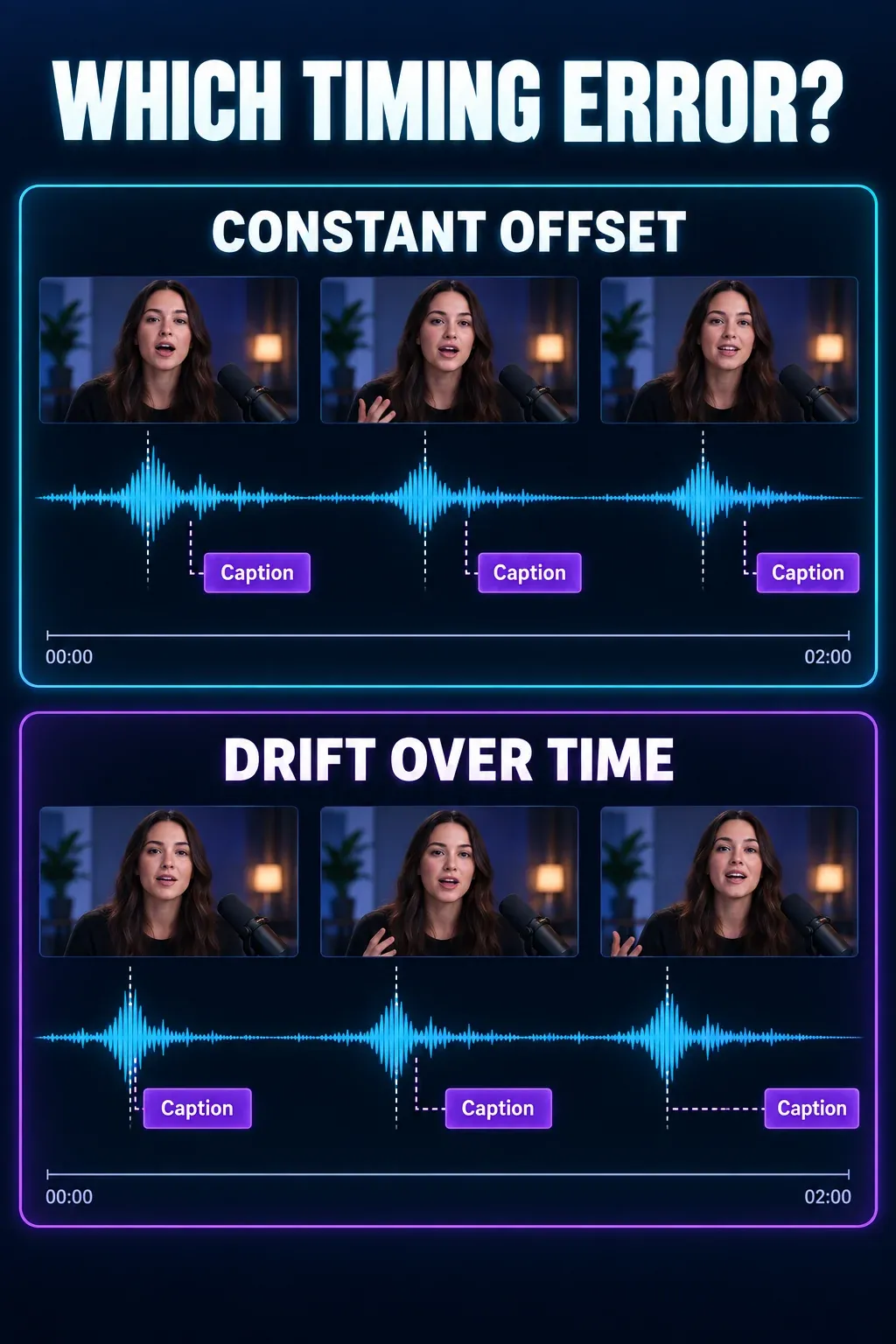
If words are correct but the text appears early, late or gradually drifts, use the caption timing diagnostic. It separates a constant offset from progressive drift, overlaps and poor segment boundaries. That distinction prevents a local timing problem from turning into a full re-captioning job.
Use this route when: captions exist and the main problem is accuracy, segmentation or sync.
3. Style captions for the screen
Style should make the words easier to follow. Start with contrast, size and placement before animation. Keep essential text away from platform controls and from the lowest edge of a vertical frame. Preview several busy and quiet shots; a style that works over one background can disappear over another.
For karaoke-style emphasis or one word at a time, open the word-by-word caption guide. It explains the difference between highlighting words inside a sentence and replacing the whole line with a single timed word. Those are different visual systems and need different timing checks.
Use this route when: the text and timing are already reliable, but readability or pacing needs work.
4. Translate or show two languages
Translation adds a second accuracy problem: the original transcript must be correct before the translation can be trusted. Fix names and ambiguous phrases in the source language first, then review the target language with context. Machine translation can preserve the wrong meaning very neatly.
CapCut documents bilingual subtitle generation on Web, Desktop and Mobile. The bilingual subtitles guide covers paired lines, layout and the file-based option when the one-click control is missing. Keep each language visually distinct, but do not shrink both until neither is readable.
Use this route when: one video needs a translated track or two languages visible together.
5. Import or export SRT and TXT files
Choose file transfer when timed text already exists or must continue in another tool. CapCut's import guidance lists direct subtitle-file import on Desktop and Web. Web uses SRT in the documented workflow; Desktop also describes timed TXT support. Mobile does not offer the same direct file-import route.
- Import subtitles into CapCut for SRT structure, encoding problems and the Desktop/Web path.
- Export CapCut captions as SRT or TXT when the timed text is the deliverable.
Do not treat a successful import as proof that every cue is correct. Check the first, middle and last minute, names with accents, line breaks and any place where the frame rate or edit changed. Before export, inspect which caption track is enabled and whether the destination expects embedded text or a separate sidecar file.
Use this route when: captions must enter or leave CapCut as timed text rather than only as pixels in the video.
6. Fix missing, stacked or broken captions
When generation fails, stalls or returns a usage message, use CapCut Captions Not Working. It begins with the source audio, language, network and project state, then gives a conservative fallback that protects the edit.
If two captions appear at once, inspect the timeline before blaming the exported file. CapCut identifies overlapping subtitle clips, duplicate auto-caption layers and manual text placed over captions as common causes. Preserve a project copy before removing layers. Disable the suspected duplicate where that control is available, or remove it from the copy; repair overlaps and preview the affected section before exporting again.
If captions are visible in the editor but absent from the result, confirm that the intended caption track is visible and included, then review the dedicated export guide. A short sample export from a duplicate project is safer than repeatedly changing a finished timeline.
Use this route when: the feature fails, captions disappear, several lines stack together or timing degrades.
A caption check before delivery
- Listen to the opening, a dense middle section and the ending with captions visible.
- Search for names, numbers, brand terms and repeated recognition errors.
- Check line breaks and text contrast over the busiest shots.
- Look for stacked tracks, overlaps and captions that extend past the spoken phrase.
- Confirm whether the recipient needs burned-in text, SRT, TXT or both.
For the broader editing sequence, return to the CapCut tutorial hub. It places captions after the rough cut and audio cleanup, where speech recognition and timing are easier to manage.
CapCut’s subtitle-file export guidance concerns export settings; it does not establish a universal fix for missing burned-in captions. The visibility checks above are editorial diagnostics. Public documentation cannot confirm every signed-in account or regional state, so check availability on the device that will finish the project.