

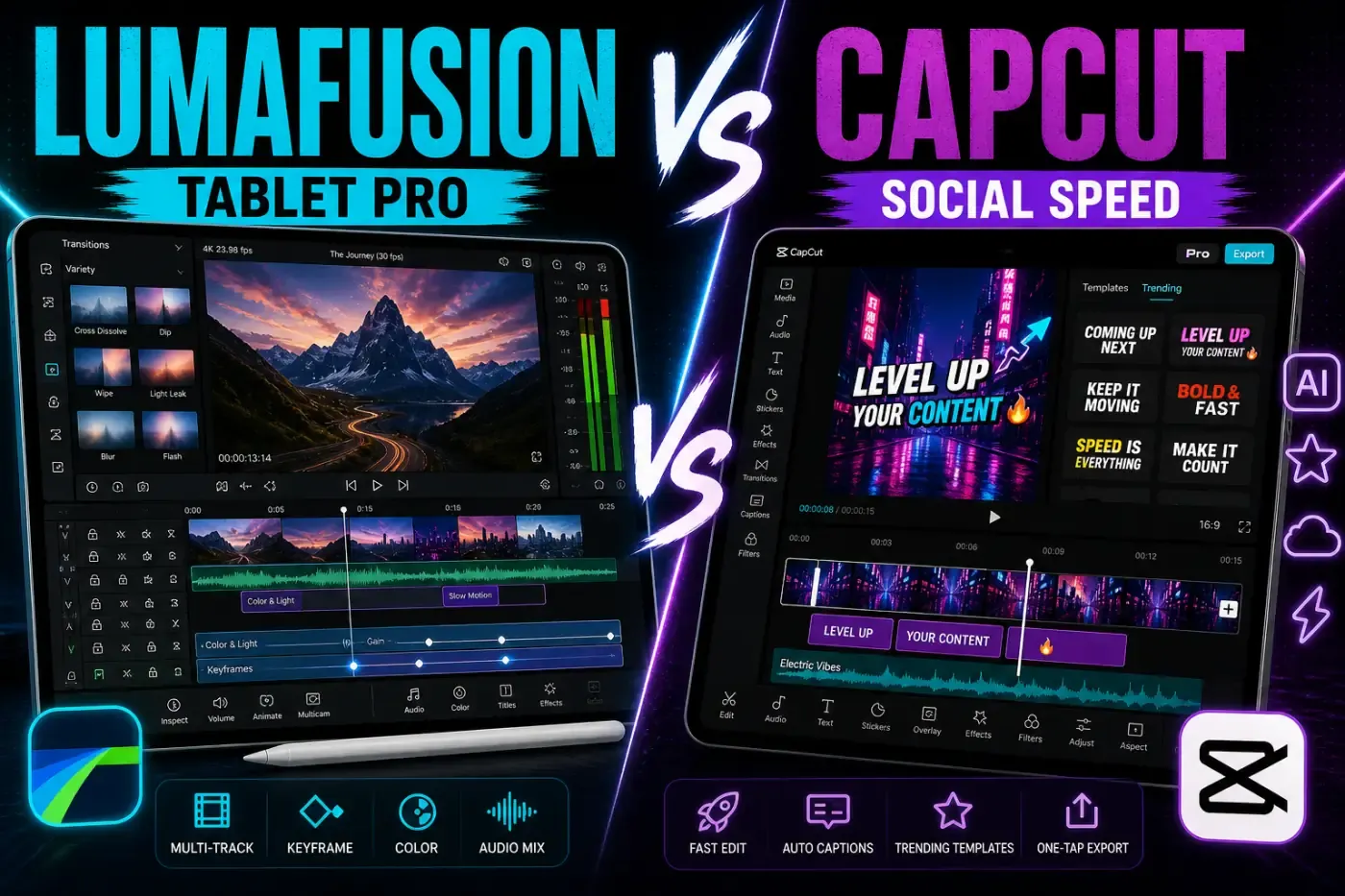
Short answer: LumaFusion is a serious CapCut alternative when your iPad or phone is the editing desk, you want a real multi-track timeline, and you would rather pay once than build a project around social templates. It is not the better choice for every creator. CapCut still wins for fast captions, trend effects, template-driven Shorts and a free starting point.
This review was rechecked on September 4, 2026 against the live US App Store and Google Play listings, LumaTouch's current Apple and Android/ChromeOS feature pages, its purchase documentation, the observable review/comparison results and dated store feedback. Prices are US snapshots; your store can show a different currency, tax-inclusive total or regional offer.
Facts at a Glance
| Question | Current answer |
|---|---|
| Best fit | iPad, iPhone, Apple Silicon Mac, Android tablet or Chromebook users who want hands-on multi-track editing. |
| Base price | US Apple and Google Play listings: $29.99 one-time base purchase. Regional prices vary. |
| Optional spend | US Apple snapshot: Creator Pass $9.99/month or $69.99/year; four separate $19.99 purchases are also listed. |
| Tracks | iOS feature page: 12 video/audio/graphic tracks plus 12 audio-only tracks with the enhanced option. Android/ChromeOS page: 6 plus 6. |
| Social video | Portrait, square and landscape projects are supported, but there is no CapCut-style template marketplace. |
| Export | Resolution, quality and frame rate are configurable; 4K, ProRes, HDR and high frame rates depend on source, device and platform. |
| Watermark | The current store and product pages list no editor-watermark restriction for the paid base app; verify the export and every third-party asset license. |
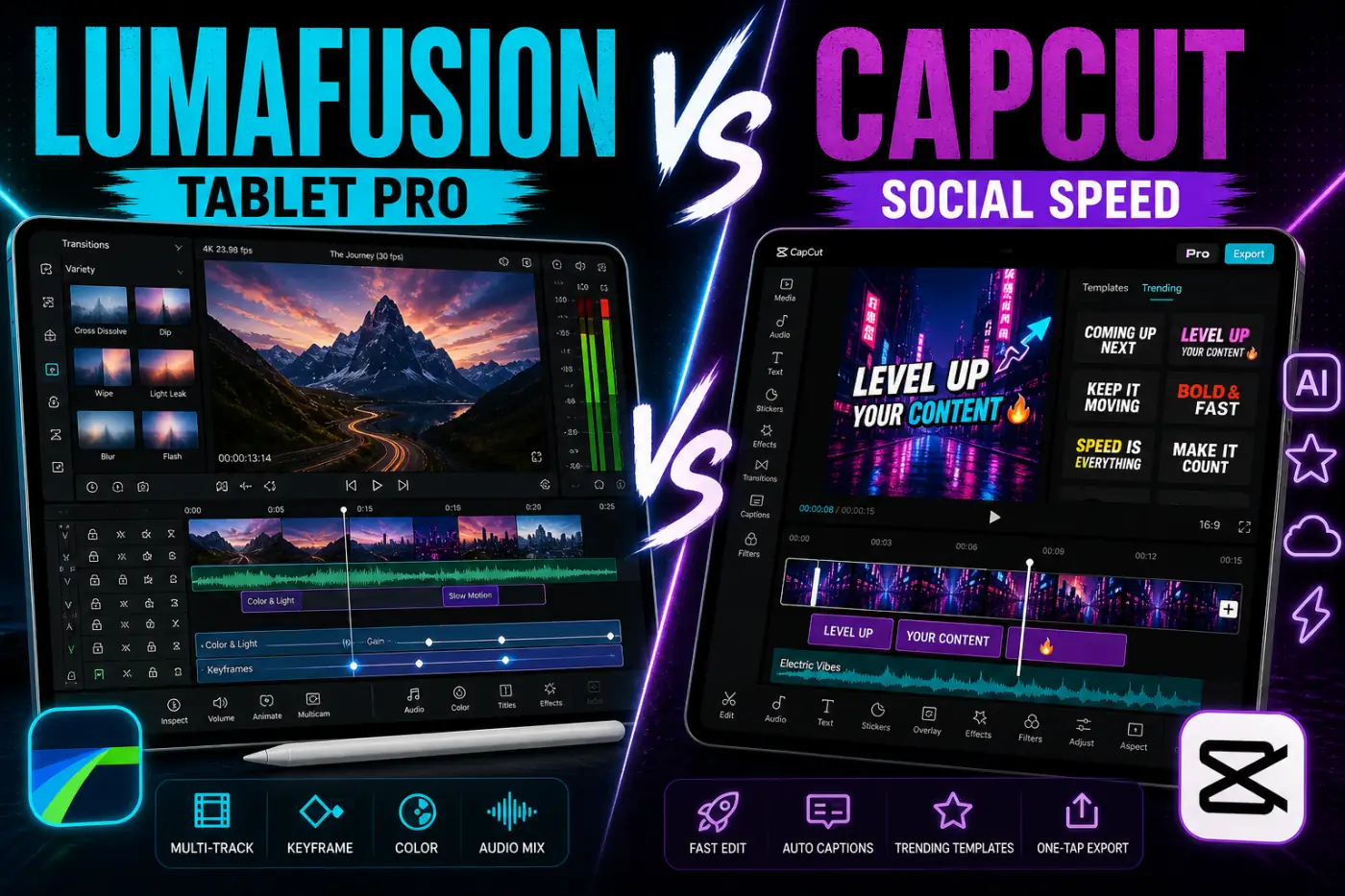
Quick Verdict: A Paid Middle Ground Between CapCut and Resolve
LumaFusion occupies a useful middle lane. It feels more like an approachable non-linear editor than a feed-first app: tracks stay visible, clips can be locked or muted, effects can be keyframed, and audio has room for an actual mix. On a large iPad, that combination is the reason people keep it installed after trying simpler editors.
The trade-off is obvious within the first project. LumaFusion asks you to decide how the edit is built. CapCut often gives you a template, an auto-caption pass or a ready-made effect and gets you to a publishable vertical video faster. If your output is mostly a talking-head Short with animated words, LumaFusion can feel like extra setup. If you're cutting interviews, travel footage, lessons, music performances or a multi-camera event, that setup buys control.
My verdict is simple: choose LumaFusion when the timeline is the product. Stay with CapCut when the feed is the product. A hybrid workflow also makes sense when you need both: serious assembly in LumaFusion, then social packaging in CapCut.
What LumaFusion Is in 2026
LumaFusion is a touch-first video editor from LumaTouch. The current product pages cover iPhone, iPad and Apple Silicon Mac, plus a separate Android/ChromeOS edition. On September 4, the US Apple listing showed version 5.5.2, released August 13, and required iOS 26, iPadOS 26 or macOS 26 on an M1-or-later Mac. LumaTouch's Android page sets a different floor: Android 10 and at least 3 GB of RAM.
That platform split matters more than the marketing headline. The iPad version is the flagship for track count and enhanced features. The Android/ChromeOS edition is still a capable editor, but its published feature list is smaller and device variation is much wider. A high-end Android tablet and a low-cost Chromebook should not be treated as the same test machine just because both appear in the compatibility list.
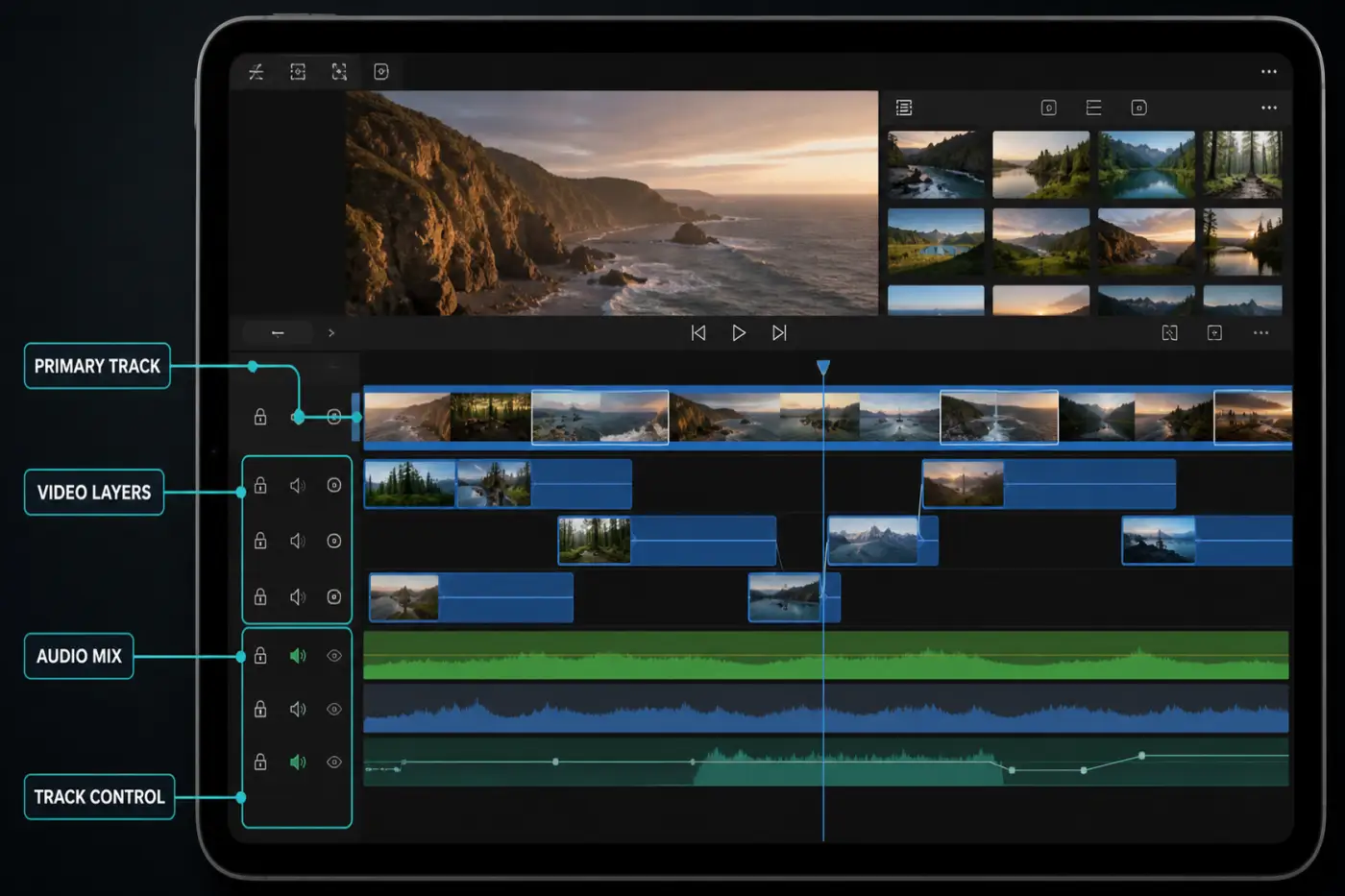
The app combines a magnetic-style primary track with track-based layers. You can insert or overwrite, link and unlink clips, add markers and notes, lock or hide tracks, and switch between 16:9, 9:16, square and other project shapes. That makes it approachable for someone coming from CapCut while leaving more room for manual decisions.
Price, Creator Pass and the Real Cost of Ownership
The current US listings show LumaFusion at $29.99 as a one-time base purchase on both the Apple App Store and Google Play. Treat those as dated US snapshots rather than a worldwide price promise. Store taxes, education pricing, promotions, bundles and currency conversion can change the number you see.
The base app is not a crippled demo. You can cut, trim, mix, title and export without a monthly subscription. The optional Creator Pass is where the purchase model becomes more complicated. The current US App Store lists it at $9.99 monthly or $69.99 yearly and describes Storyblocks access plus enhanced features. Speed Ramping & Enhanced Keyframing, Multicam Studio and FCPXML Export are each listed at $19.99 as separate purchases. CoreMelt PaintX is another $19.99 third-party plug-in; the current Creator Pass overview does not promise that PaintX is included.
On iOS, Creator Pass also unlocks adjustment clips and raises the published track ceiling from the 6+6 base layout to 12 video/audio/graphic tracks plus 12 audio-only tracks. LumaTouch's current purchase overview identifies Multicam Studio and FCPXML as iOS-only extras. Do not assume the Android subscription unlocks every iPad feature; check the Features screen on the device where you will edit.
The Timeline and Learning Curve
LumaFusion’s timeline is its strongest reason to exist. Clips are not hidden behind a single strip of thumbnails. You see the primary storyline, connected video layers and audio tracks, with headers for mute, hide and lock. Insert and overwrite editing are available beside the more forgiving magnetic behavior, so you can work quickly without surrendering track control.
On an iPad with a keyboard or Apple Pencil, trimming feels precise. A finger is useful for moving around the project; a trackpad is better for tiny edits and title work. The app doesn't demand a desktop monitor, but a long 4K project is easier to judge on a larger iPad than on an iPhone. The Android and ChromeOS build keeps the same broad model, with six video/audio or graphic tracks and six additional audio tracks in LumaTouch’s published feature list.
The learning curve is gentler than DaVinci Resolve but steeper than CapCut’s one-tap workflow. New users usually understand trimming and transitions quickly. They take longer to learn the difference between a primary clip, an attached clip and an audio-only layer, especially when a project is imported from another device. LumaTouch’s in-app help and reference guide are worth using before a deadline.
Effects, LUTs, Keyframes and Motion Control
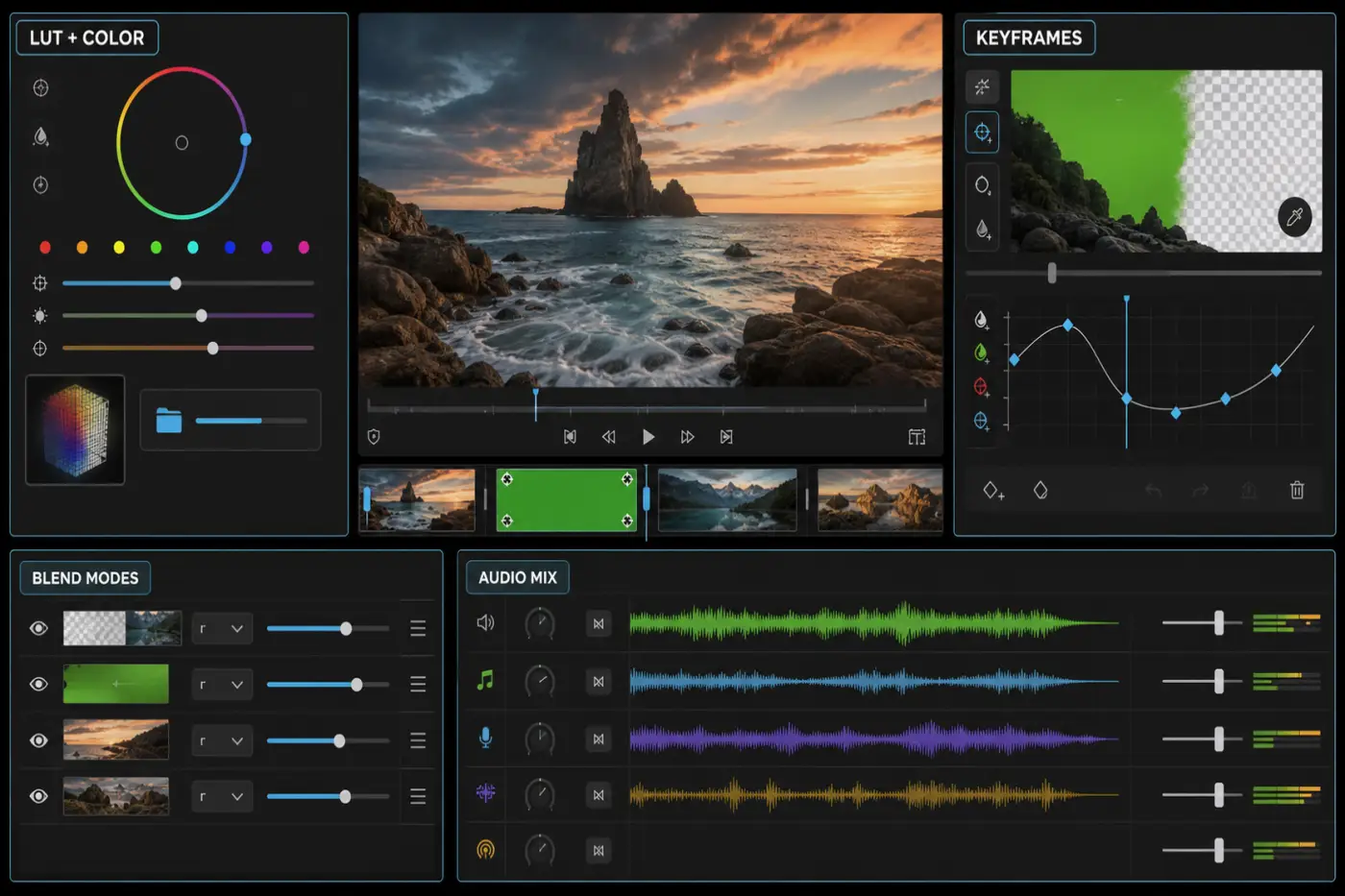
The base feature set is already more manual than CapCut's typical social workflow. LumaTouch lists color correction, green-screen and chroma/luma keying, blur and distortion effects, blending modes, stabilization and unlimited keyframes. You can import LUTs in .cube or .3dl formats, save effect presets and build layered titles with custom fonts, shapes and images.
Enhanced Keyframing adds speed ramps, Bézier motion paths, easing and more tracks on iOS. These are practical tools rather than a pile of novelty effects. You can animate a logo along a curve, keep a lower third attached to a moving subject, or change the speed of a sports clip without leaving the timeline. CapCut can do some of this faster when a matching preset exists; LumaFusion gives you a steadier result when the shot doesn't fit a preset.
There are limits. LumaFusion is not a full compositing package, and its touch interface makes complex masking slower than a desktop application. Stabilization, HDR handling and high-resolution playback depend on the device and source media. A feature name in a product page is not a guarantee that an old Android phone will preview it in real time.
Audio, Titles and Captions
LumaFusion treats audio as part of the edit rather than a soundtrack sticker. You can keyframe volume, panning and EQ, duck music under dialogue, work with dual-mono recordings and use voice isolation or third-party audio plugins where supported. The iOS listing advertises six additional audio tracks in the base layout and more with the enhanced track purchase.
The titler is another clear advantage for branded work. A title can contain multiple text layers, shapes and images, with custom fonts, borders, shadows and saved presets. That is useful for a channel intro, a course lesson or a documentary lower third. It is less useful if what you really want is a bank of kinetic caption presets.
Do not buy LumaFusion for a CapCut-style auto-caption workflow. The current LumaTouch and store feature pages list multilayer titles and title presets, but they do not list an equivalent speech-to-text caption generator. Product pages can lag a rollout, so check the build on your device if captions decide the purchase. For a talking-head video today, CapCut's automatic-caption workflow or a dedicated caption tool is the clearer documented path.
iPad, Apple Silicon Mac, Android and ChromeOS Differences
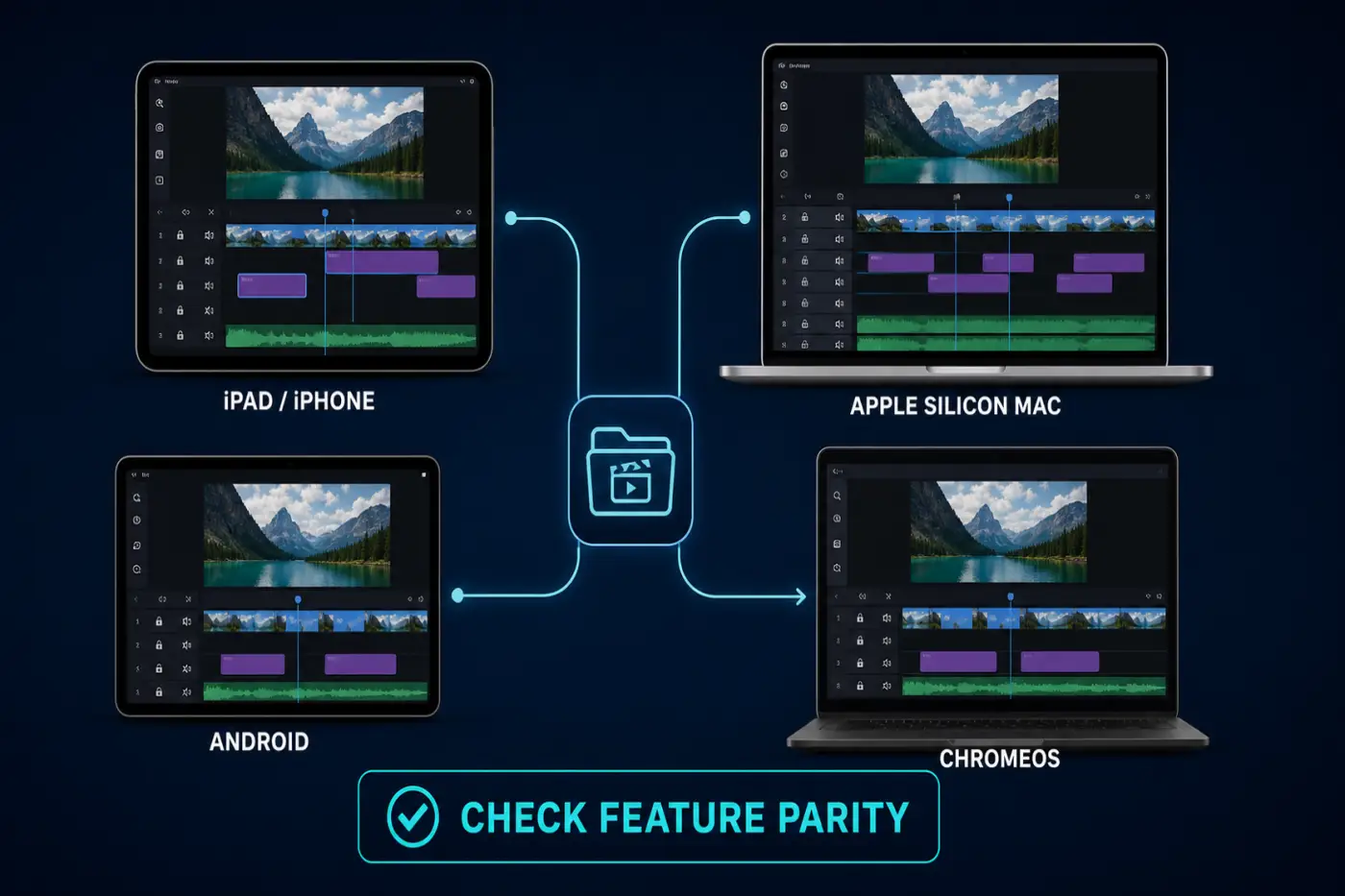
LumaFusion is cross-platform in a qualified sense. The name and project concept travel, but feature parity is not a promise. iOS/iPadOS gets the widest published feature set: up to 12 video/audio or graphic tracks plus 12 additional audio tracks with the enhanced option, Creator Pass access to Multicam Studio and FCPXML, and ProRes editing/export on compatible devices.
The Apple Silicon Mac version is useful when you want the same touch-first editor on a larger screen. It requires an M1-or-newer Mac in the current App Store listing. It should not be confused with a full Final Cut Pro or desktop Premiere replacement; its appeal is that an iPad project model follows you to a Mac without changing the entire editing language.
Android and ChromeOS are more variable. LumaTouch’s official page lists Android 10+, 3 GB RAM, six video/audio or graphic tracks and six additional audio tracks. It supports portrait projects, keyframed effects, LUT import, color correction, title layers, cloud media and archive projects, but iOS-only modules must not be assumed. The Google Play listing dated June 11, 2026 also shows device categories for phones, tablets and Chromebooks, useful confirmation that this is a shipped Android/ChromeOS product rather than an abandoned beta.
Export, 4K, HDR and High Frame Rates
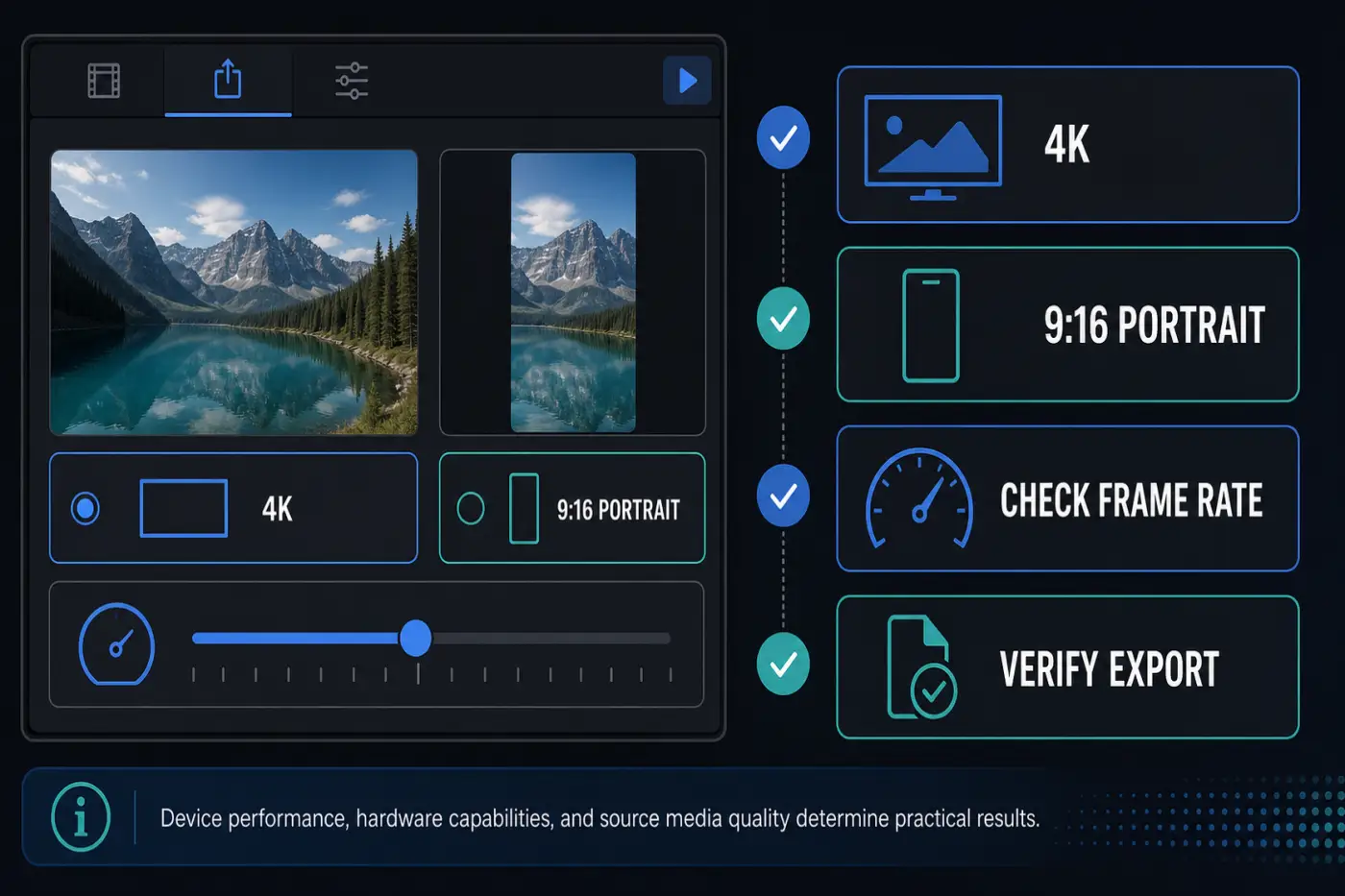
LumaFusion lets you control resolution, quality and frame rate at export, and it supports aspect ratios from widescreen to 9:16 portrait. Its current Apple listing names project frame rates from 18 to 240 fps; LumaTouch lists full ProRes editing and export on compatible Apple devices. The same version history says newer iPads and iPhones can export 5K, 6K and 8K. Those are separate capability ceilings, not a promise that every device can decode, preview or export every resolution, codec and frame-rate combination.
For a reliable 4K workflow, match the project to the source clips, leave enough free storage for the rendered file, and test a short section before a long export. A 4K60 phone clip, an HDR iPhone clip and a 4K project on a low-memory Android tablet are three different stress cases. If the deliverable is for YouTube or Reels, confirm the final resolution and frame rate in the exported file rather than trusting the project label.
HDR and ProRes are especially device-sensitive. The iOS page says ProRes export is available on compatible devices; it doesn't make that universal across iPhone, iPad, Mac and Android. Android/ChromeOS users should also confirm codec support from their device and destination before committing to a paid workflow. Our CapCut export settings guide is useful when you move the finished file into a social publishing step.
Project Archives and Handoff
LumaFusion’s project archive is one of the reasons it works well for travel and field production. You can package a project with media, trimmed media or the edit data, store the package in Files or cloud storage, AirDrop it, and restore it from the project manager. That is a safer handoff than sending a finished MP4 when you know the edit will continue elsewhere.
It is still a file workflow, not universal live collaboration. Keep the project package, original camera files and any custom fonts or LUTs together. When you move between iPad, Apple Silicon Mac and Android/ChromeOS, verify that the target build can open the package and that third-party assets are available. A package with missing media can look like a broken edit even when the timeline data is fine.
Cloud storage can help with transfer, but it doesn't remove bandwidth or storage costs. Large 4K and ProRes packages are much bigger than a social export. Before leaving for a shoot, open a restored copy on the second device and test an export. That five-minute check is cheaper than discovering an unsupported codec after the original device has been wiped.
Performance, Storage and Reliability
On a recent iPad, LumaFusion feels responsive during ordinary cuts and titles. The pressure arrives with long timelines, many still images, layered effects, high-frame-rate footage and limited free storage. Current Google Play reviews report crashes, lag and preview or export problems on some Android devices; other users describe stable 4K editing. Those are real user reports, but they are not a failure rate or a verdict on every Android device.
Apple feedback is mixed too. A March 2026 reviewer on the current US ratings page described earlier crashes and a later support-led fix, while another June review said the app had become unreliable. These are individual experiences, not a measured failure rate. The August 13 release notes for 5.5.2 specifically mention a crash when trimming or previewing library media, which is a stronger reason to keep project packages and exported checkpoints than pretending any build is risk-free.
Keep free space for source media, caches and the export. Use optimized or lighter media when the device struggles, split a very long project into reels or chapters, and close other heavy apps before a 4K export. If your workflow involves hundreds of photos, test the media library with a copy of the project first. Android hardware variation makes that test even more important.
There is a practical difference between a project that is merely possible and one that is pleasant. Six tracks can be enough for a travel film, but a documentary with b-roll, titles, music, room tone, subtitles and adjustment effects can use them quickly. On iOS, the enhanced option raises the ceiling; on Android/ChromeOS, plan the layer budget before you buy. If you routinely need dozens of independent video layers, the DaVinci Resolve review covers a deeper desktop and iPad route.
Storage planning deserves the same attention. An archive that includes original media is a safety net, but it can be much larger than the final movie. A trimmed-media archive is smaller, yet it is not a substitute for keeping the original camera card or a verified backup. I would keep one full archive on an external SSD or cloud drive, one data-only backup, and a finished export that can be opened without LumaFusion. That three-part routine protects you against a damaged project database, a lost device and a last-minute codec problem.
For creators who work offline, this is a strength. You can organize local media, edit without a social account and export when the connection is unavailable. Storyblocks browsing and cloud imports are different: they need a connection during discovery or download, and the license for those assets follows the library terms. Imported songs, fonts and graphics remain your responsibility.
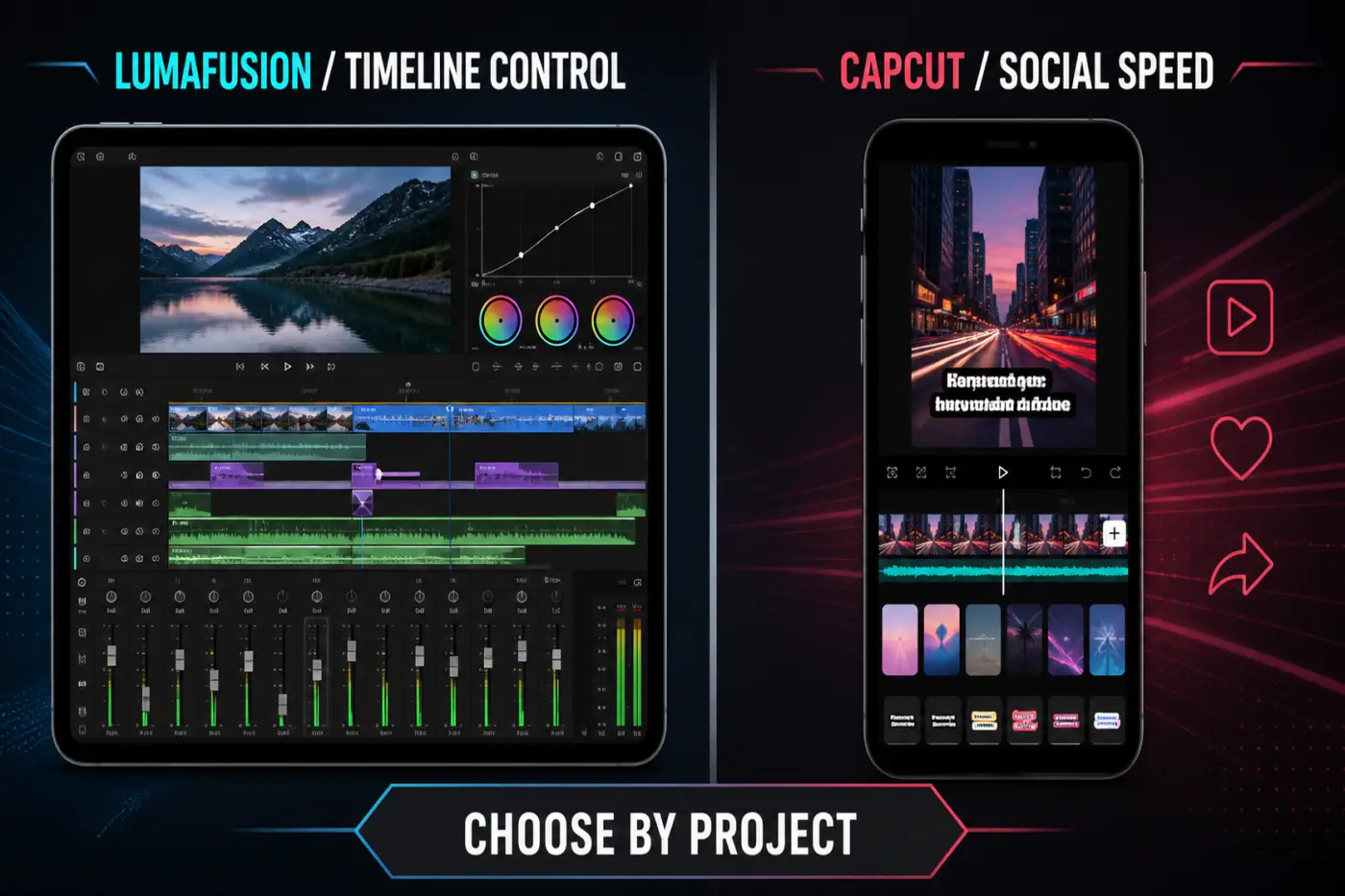
LumaFusion vs CapCut: Feature Comparison
| Workflow question | LumaFusion | CapCut |
|---|---|---|
| Starting cost | Paid app, with optional Creator Pass and modules. | Free entry tier with optional Standard and Pro access; see the current CapCut Pro guide. |
| Timeline control | Track-based editing with a magnetic-style primary track, visible headers, keyframes and audio mixing. | Fast multi-track editing with a stronger social-template and effect workflow. |
| Captions | Manual/custom title layers; no promise of CapCut-style auto-caption parity. | Auto captions, animated caption styles and social presets are central strengths. |
| Effects | Color, LUTs, keys, stabilization, blend modes and detailed keyframing. | Large effect/template library and AI-assisted social tools. |
| Platforms | iPhone/iPad/Apple Silicon Mac plus Android/ChromeOS edition; feature parity varies. | iOS, Android, Windows, macOS and web editor with account/cloud workflow. |
| Export | Control resolution, quality and frame rate; high-end formats depend on device. | Fast social presets and broad sharing; some resolution/features can be plan-dependent. |
| Best project | Interviews, travel films, lessons, music and multi-layer edits. | Short-form social posts, templates, captions and quick trend edits. |
Where LumaFusion Still Feels Smaller Than a Desktop Editor
LumaFusion’s strengths can hide its boundaries. It is a mobile editor with a carefully designed timeline, not a complete desktop post-production suite. You won't get the same breadth of third-party integrations, compositing depth, project interchange or collaborative review that a large desktop system offers. FCPXML export can move an iOS timeline into Final Cut Pro, but it is an optional feature and an interchange step, not a promise that every title, effect or transition will survive perfectly.
The touch-first interface is another trade. It is excellent when you're cutting on a train, in a hotel or beside a camera rig. It is less efficient when a 90-minute timeline needs hundreds of tiny selections, nested versioning and a large bin structure. A keyboard and trackpad improve the experience, but the app is still shaped around direct manipulation. That is why it feels more immediate than Resolve on an iPad and less expansive than Resolve on a desktop.
These limits are not reasons to dismiss LumaFusion; they are reasons to choose it deliberately. If your deliverables fit a mobile-first production rhythm, the focused interface is an advantage. If your client expects shared bins, review comments, extensive plug-ins or a round-trip between several finishing departments, budget for a larger editor and use LumaFusion as an on-location or assembly tool.
Choose LumaFusion If You...
- Edit on an iPad, iPhone, Apple Silicon Mac, Android tablet or Chromebook and want the timeline to stay visible.
- Need layered video, real audio mixing, keyframed motion, LUTs, green-screen work or custom titles.
- Prefer a one-time base purchase to a subscription-first editor.
- Make longer YouTube, course, interview, travel or event projects instead of only trend-led Shorts.
- Are willing to learn project archives, media management and export checks.
Stay With CapCut If You...
- Need automatic captions, kinetic text, templates and effects more than track-level control.
- Publish from different phones, a Windows PC, Mac and browser and want one familiar social workflow.
- Want to try an editor without paying before you know how often you'll use it.
- Rely on AI-assisted reframing, background tools or trend formats that LumaFusion doesn't match one-for-one.
- Would rather finish a 30-second vertical edit in minutes than organize a conventional project.
A Practical LumaFusion and CapCut Hybrid Workflow
A hybrid is not a compromise if the handoff is deliberate. Assemble the story in LumaFusion: sync the interview, clean the dialogue, balance music, add the lower thirds and create a clean master. Export a high-quality intermediate or final file, then open it in CapCut only for platform-specific captions, templates, trending audio or a quick 9:16 variant.
Keep the master and the social version as separate deliverables. CapCut may change a caption or recompress an export; LumaFusion should remain the source project. If you need a browser step, the CapCut web editor guide explains where a desktop/browser handoff fits. For the wider cluster, compare this page with the CapCut alternatives guide.
Frequently Asked Questions
Is LumaFusion free?
No. The live US Apple and Google Play listings both show a $29.99 one-time base purchase in this check. Creator Pass, enhanced features and PaintX can cost extra, and regional store pricing can differ.
Is LumaFusion better than CapCut?
It is better for visible multi-track editing, custom keyframes, audio mixing, LUTs and longer projects. CapCut is better for free entry, documented auto captions, templates, AI-assisted social tools and a broader phone, desktop and web workflow. The project decides the winner.
Does LumaFusion work on Android and Chromebook?
Yes. LumaTouch publishes a separate Android/ChromeOS edition for Android 10+ devices with at least 3 GB RAM, and Google Play lists phones, tablets and Chromebooks. Track count and some enhanced features differ from iOS, so check the exact device before buying.
Can LumaFusion export 4K or 60 fps?
Yes, on supported hardware and with compatible source media. The current product pages document 4K workflows and frame-rate controls, while Apple's version history also lists 5K, 6K and 8K export on newer iPads and iPhones. 60 fps, HDR, ProRes and the highest resolutions remain source-, device-, build- and platform-dependent. Test a short export on the exact hardware before promising a client a format.
Does LumaFusion have auto captions like CapCut?
LumaFusion has powerful custom title layers, but its current vendor and store feature pages do not list a CapCut-style speech-to-text caption generator. If automatic captions are central to the workflow, verify the current build before paying; CapCut or a dedicated caption tool has the clearer documented route today.
Can I move a LumaFusion project to another device?
Yes, through an archived project package that can include media, trimmed media or the edit data. Store it in Files or compatible cloud storage, AirDrop it when appropriate, and restore it from the project manager. Keep original media, fonts and LUTs available and confirm the target platform can open the package.
Final Verdict
LumaFusion is one of the most convincing CapCut alternatives for an iPad-centered creator who has outgrown a single social timeline. Its paid base app, visible tracks, audio controls, keyframes, LUTs, custom titles and project archives make it feel like a practical field editor rather than a collection of presets. The optional Creator Pass can expand that toolset, but it also means you should price the exact features you need.
CapCut remains the smarter pick for free-first, caption-heavy, trend-led publishing. LumaFusion is the smarter pick when you want to make the edit yourself and keep the project under control. If you need both kinds of work, use LumaFusion as the master timeline and CapCut as the social finishing room.